
How to Get Your South African Police Clearance from Abroad
How to Get Your South African Police Clearance from Abroad
For South Africans living overseas: what is different about applying from abroad, what slows it down, and how to plan around a visa or residency deadline.
Administrative red tape and visa deadlines cause real stress for South Africans living abroad. Getting an official document from thousands of kilometres away is often the hardest part of an emigration, residency or job application.
The short answer
You do not need to come back to South Africa to get your police clearance certificate. Your fingerprints are taken in the country you live in, the original documents are sent to the South African Police Service in Pretoria, and SAPS issues the certificate.
Three things make an application from abroad harder than a local one: the fingerprints, the time in transit, and the age limit that your destination country or DIRCO puts on the certificate. Most delays come from one of the three.
Start your applicationChat to us on WhatsApp
Police Clear (Pty) Ltd is an independent document facilitation company. We are not the South African Police Service and we do not issue certificates. SAPS issues them.
What a South African police clearance certificate is
It is the official SAPS document stating whether any criminal convictions are recorded against you in South Africa. Foreign authorities sometimes call it a penal record, a certificate of character or a certificate of good conduct.
South Africans abroad most often need one for emigration and residence permits, citizenship applications, employment and university study. It is issued only by SAPS, Criminal Record and Crime Scene Management, in Pretoria.
What is different when you apply from abroad
| What it means for you | |
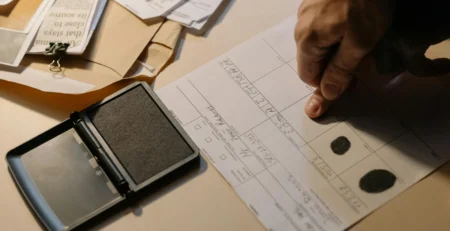
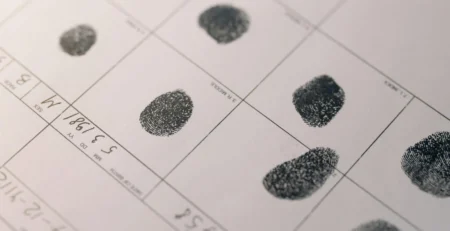
| Fingerprints | Taken in the country you are in, on that country’s official fingerprint form, or on the SAPS 91(a) where available |
| Originals only | SAPS does not process copies or scanned versions of fingerprints, so the original documents have to travel |
| No email delivery | SAPS does not scan and email finished certificates. The original has to reach you |
| Collection deadline | SAPS destroys certificates that are not collected within 3 months of being finalised |
| Legalisation | Most foreign authorities need the certificate apostilled or authenticated by DIRCO, which adds a step in Pretoria |
For more on the fingerprint form itself, see the SAPS 91(a) form explained.
The traditional route through a South African mission
South Africans abroad can apply through a South African embassy, high commission or consulate, which sends the application on to Pretoria. It is an official route. It is also a long one: the application travels through the mission before it reaches SAPS, and SAPS states that its own finalisation takes approximately 15 working days once all documents are received, excluding postal time, with a backlog currently reported.
For anyone working to a visa or residency deadline, that transit time is usually the part that hurts.
Timing: the age limit on your certificate
A police clearance certificate does not have one universal validity period. The authority you are giving it to decides how old it can be, and many set strict limits. Our guides cover the rules for the United Kingdom, the United States and Australia, and our validity guide explains the rest.
If the certificate needs an apostille, there is a second limit: DIRCO only legalises certificates less than six months old. See the police clearance apostille guide.
The practical rule is to work backwards from the date you have to submit, not forwards from today.
What goes wrong from abroad, and what it costs you
Fingerprints on the wrong form, or unreadable. The prints have to be taken again, in another country, and the application sent again.
Copies or scans. They are not processed. An application sent with scanned prints is an application that has not started.
A name that does not match. If you have changed your surname, for example on marriage, the documents need to show the link between the names.
A certificate that expires before it is used. Applying too early can push the certificate past your destination’s age limit, or past DIRCO’s six months, before you submit.
No plan for getting the certificate to you. SAPS does not email certificates, and uncollected certificates are destroyed after 3 months.
From abroad, every one of these costs more than it would at home, because each correction means another round of international post.
How Police Clear helps South Africans abroad
The Pretoria end handled for you. Applications are submitted directly to the Criminal Record Centre in Pretoria and handled end to end, for applicants in South Africa and abroad. We collect, we expedite, and we deliver.
Faster than the standard route. Standard turnaround is 5 to 7 business days, with 3 to 5 and 1 to 3 business day options, and approximately 80% of cases are completed sooner than quoted. Turnaround can be longer where a record is found. Timeframes are estimates, not guarantees, and exclude international postage.
Legalisation in the same plan. We assist with legalisation and apostille of South African documents, so the certificate and its apostille are timed together.
Start your applicationChat to us on WhatsApp
Police clearance from abroad: cost
| Official SAPS fee | R190, paid to SAPS |
| Police Clear service fee | Private service fee, quoted on request |
| Standard turnaround | 5 to 7 business days |
| Need it sooner | 3 to 5 or 1 to 3 business days |
The R190 is the fee SAPS charges to run the check, and it is payable whichever route you use. Police Clear charges a separate private service fee for handling the application, quoted on request. Tell us which country you are in, where the certificate is going and your deadline, and we will confirm what applies and what it costs.
Fees are quoted in South African rand and include VAT at 15%. A binding price is given in a written quotation. Statutory fees payable to SAPS, Home Affairs or DIRCO are set by those authorities and are payable in addition. Our refund and cancellation terms are in our terms and conditions.
Frequently asked questions
Can I get a South African police clearance without coming back to South Africa?
Yes. Your fingerprints are taken in the country you live in and the application is sent to SAPS in Pretoria.
Who can take my fingerprints abroad?
They are taken in the country you are in, on that country’s official fingerprint form or on the SAPS 91(a) where available. Confirm the acceptable form before your prints are taken.
Can I send scanned fingerprints from overseas?
No. SAPS does not process copies or scanned versions of fingerprints. The originals have to be sent.
How long does it take from abroad?
Through Police Clear, an estimated 5 to 7 business days as standard, with faster options, plus international postage. SAPS states its own finalisation takes approximately 15 working days once all documents are received, excluding postal time.
Will SAPS email my certificate?
No. SAPS does not scan and email finished certificates, and destroys certificates not collected within 3 months of being finalised.
Do I need an apostille on my certificate?
Usually, if you are using it abroad. Countries party to the Apostille Convention need an apostille from DIRCO, and others need a certificate of authentication. DIRCO only legalises certificates less than six months old.
How long is my police clearance certificate valid?
There is no single validity period. The authority you give it to decides how old it can be. See our validity guide.
This page is general information about a document facilitation service. It is not legal or immigration advice. Requirements are set by SAPS, DIRCO and the destination country, and change from time to time. Confirm them with the relevant authority before you rely on them.